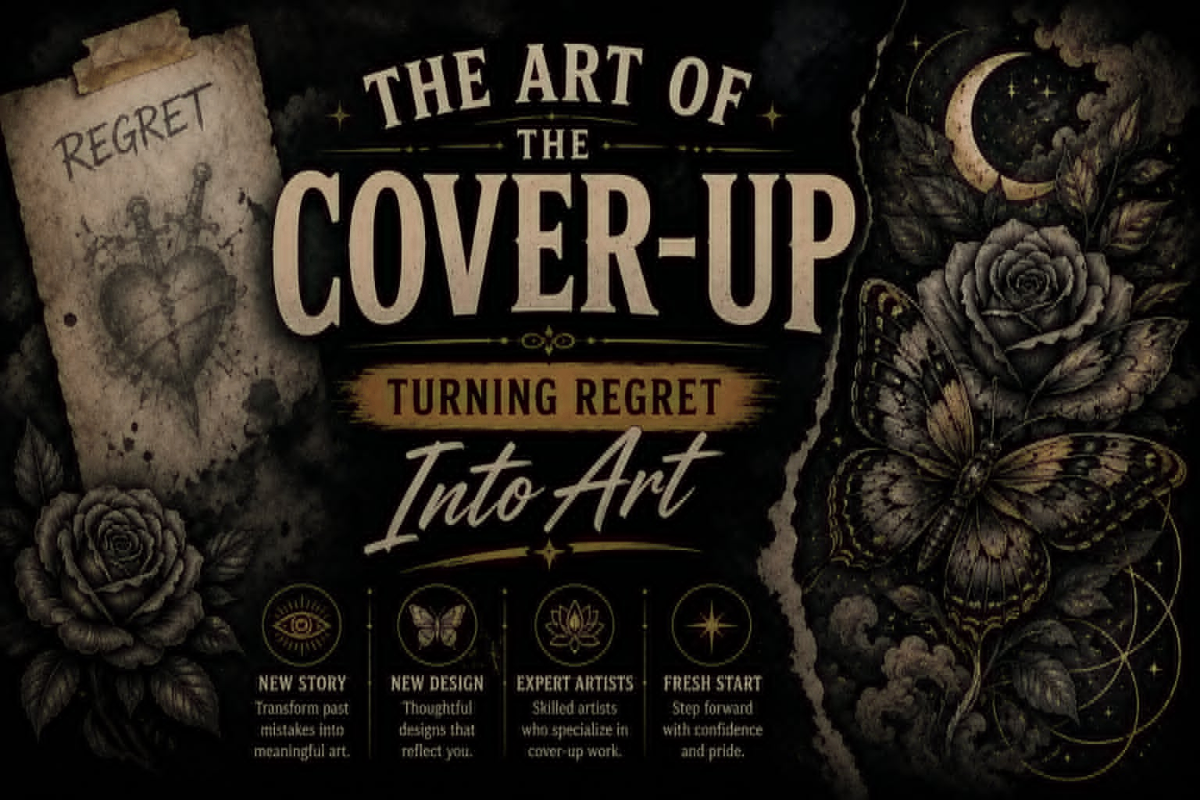
We have all seen them — the faded ex's name, the drunken holiday mistake, the piece that seemed like a good idea at 18. But here is the truth: a bad tattoo does not have to be a life sentence. At Carpe Diem Tattoo Studio, cover-ups are one of our favourite challenges.
How Cover-Ups Work
A cover-up tattoo uses strategic design, dark shading, and clever composition to hide or incorporate the existing ink. The key is contrast — the new design must be darker and bolder in the areas where the old tattoo sits. That does not mean every cover-up has to be massive; skilled artists can work wonders with surprisingly compact designs.
What Makes a Good Candidate?
Not every tattoo can be covered, but most can. The factors that matter most are:
The Consultation Process
Cover-ups require a longer consultation than fresh tattoos. We photograph the existing piece, trace the area, and sketch multiple concepts. You might not see the final design until a day or two before your session because the artist needs time to problem-solve the best approach. Trust the process — a rushed cover-up is a bad cover-up.
Popular Cover-Up Strategies
Managing Expectations
A cover-up will almost always be larger and more detailed than the original tattoo. It might also take more sessions. Be prepared for that. The result, though, is a piece of art that tells a new story — one of redemption rather than regret.
If you are sitting on a tattoo you hate, book a free consultation at our Macclesfield studio. We love turning "what was I thinking?" into "I am so glad I did this."