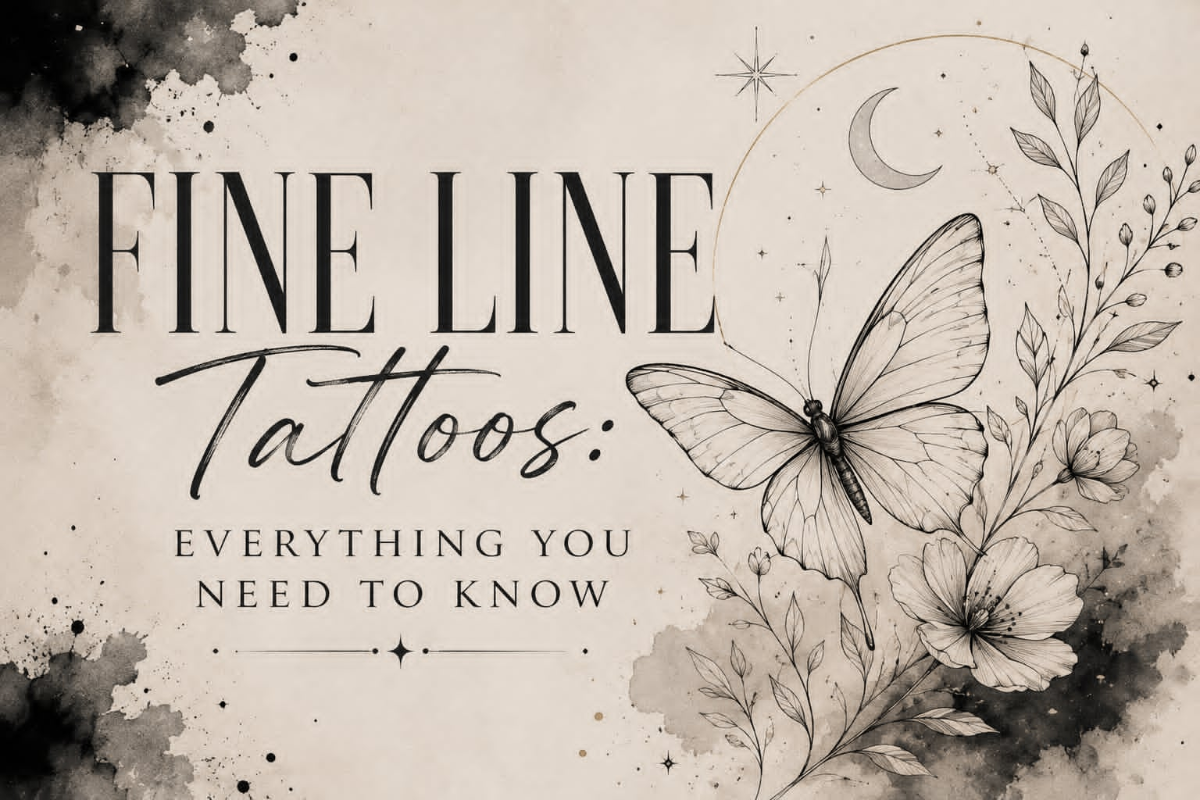
Fine line tattoos have exploded in popularity over the last few years. Their delicate, minimalist aesthetic appeals to people who want something subtle, elegant, and deeply personal. But fine line work comes with its own set of rules, risks, and realities that every client should understand.
What Is Fine Line Tattooing?
Fine line tattooing uses single-needle or very small needle groupings to create thin, precise lines with minimal shading. The result is a design that looks almost like a pen drawing on the skin. Common subjects include botanicals, small animals, celestial symbols, script, and abstract shapes.
The Appeal
Fine line tattoos are less painful than bolder styles because the needle does less damage to the skin. They heal faster, look discreet, and suit people who want a tattoo that feels more like jewellery than a statement piece. They also photograph beautifully — which is partly why Instagram has fuelled their popularity.
The Reality Check
Here is the truth that not every studio will tell you: fine line tattoos do not last as long as bolder work. The lines are thinner, the ink is less dense, and over time the skin's natural regeneration blurs them. A fine line tattoo on a finger or hand might need a touch-up within a year or two. On the upper arm or thigh, it will hold longer — maybe five to ten years before softening noticeably.
Placement Is Everything
Fine line tattoos last longest on areas with stable, smooth skin. The upper arm, outer forearm, calf, and ribs are ideal. Avoid high-friction areas like fingers, palms, inner wrists, and feet. These spots regenerate faster and blur delicate lines quickly.
Choose the Right Artist
Fine line work is technically demanding. A shaky hand, the wrong needle depth, or poorly mixed greywash will ruin the piece. Look for an artist whose healed fine line work looks as crisp as their fresh photos. At Carpe Diem, Shannon specialises in fine line and has developed techniques that maximise longevity without sacrificing delicacy.
Aftercare for Fine Line
Fine line tattoos need gentle aftercare. Keep them moisturised but not soaked. Avoid sun exposure completely during healing and use SPF once healed. Because the ink is less dense, sun damage will fade them faster than bolder styles.
When Fine Line Is Not Right
If you want a tattoo that will look identical in twenty years, fine line is not the style for you. Go for bold traditional, Japanese, or solid black and grey instead. Fine line is best for people who see tattoos as evolving art and are happy to refresh them periodically.
Interested in a fine line piece? Book a consultation at our Macclesfield studio and we will talk through placement, design, and what to expect long-term.